
On a quest for impact
My journey from wildlife ecologist to climate bro and back again

In spring of 2022, I received tenure at the University of Idaho, and a few weeks later, I quit.
I shocked a lot of people and thrilled others who perhaps were also longing for change in their own lives. But for me, it was not a shock, or a thrill— it was a necessity.
Big change happens when it’s the only acceptable option. Sure, sometimes it happens when it doesn’t have to, but we’re humans, and we often like things to stay the same. That’s why I thought it might be useful to share my own journey through “necessary change,” with its challenges and joys. Perhaps it will be useful to others contemplating their own trajectories.
I grew up through turmoil, and I didn’t like it, at all. As a kid, I didn’t get a say in how things shifted in our lives. As my parents left their high-control religious group (It was a cult! Here’s a podcast), I was ripped from my social fabric and had to stitch my tattered self into mainstream American Culture. Suffice it to say, my new rural middle school did not greet my tie-died, nature-loving, flute-playing self with open arms. As a de facto immigrant in America, I learned to substitute TV references for tie die, but retain an underlying sense of otherness to this day.
I am also very fond of durability as a result. I live in a hundred-year-old brick house, and my hobby is pottery, the outputs of which can last 1,000 years. You get the picture. But despite all that, I’ve changed a my own (professional) life profoundly in the past few years, because I think our entire system for collective decisions and actions is in need of an overhaul.
Slowly dawning understanding
The realization that I had to change my professional life was less a bolt of lightning, and more a long dawn. A barely-perceptible lightening, a subtle stripe of navy blue against black; then, the skyward suffusion of purple, pink and esaffron. Finally, the sun blazing over the horizon, undeniably illuminating what was only dimly visible.
But clarity is not always comfortable. I had a cushy and coveted job for which I’d trained for over a decade, first as an undergraduate, then a PhD student, and finally as a postdoctoral researcher. And if I just kept going, I’d have stability for life (words to make a younger me swoon).
The early signs that change might be needed had been there for awhile, but I’d been working hard to ignore them. My frustrations festered as my research on wildlife conservation failed to move the needle for the things I cared about, and I slowly realized that the entire system for natural resource management was stuck. After a decade publishing “applied” conservation research, most of the papers I’d written had never been applied at all, instead just collecting digital dust.
But change is scary. It was so much easier to keep running on the career wheel— winning grants supporting students publishing papers bolstering my next grant application, and so on. It was hard to find the time to look up from tending my tiny, un-scalable science start-up. And parts of it were really fun! I loved working with smart, creative scientists, collecting data in beautiful places, and discovering brand-new ecological knowledge. And yes, I didn’t love the teaching, arguably the highest-impact part of being a professor. But I was told this was the best job to possibly have, by my mentors and peers, and for awhile, I believed them.
For me, it a series of catalytic events illuminated my professional life in a harsh yet necessary light. The birth of my first son, into the teeth of the pandemic in June 2020, led to the visceral realization that the world was changing much faster than I’d thought. My tiny new bundle of humanity would (hopefully) be very much alive in 2100, which made all those dire, distant predictions about the future of climate, nature, and resulting human suffering feel very real, and very soon.
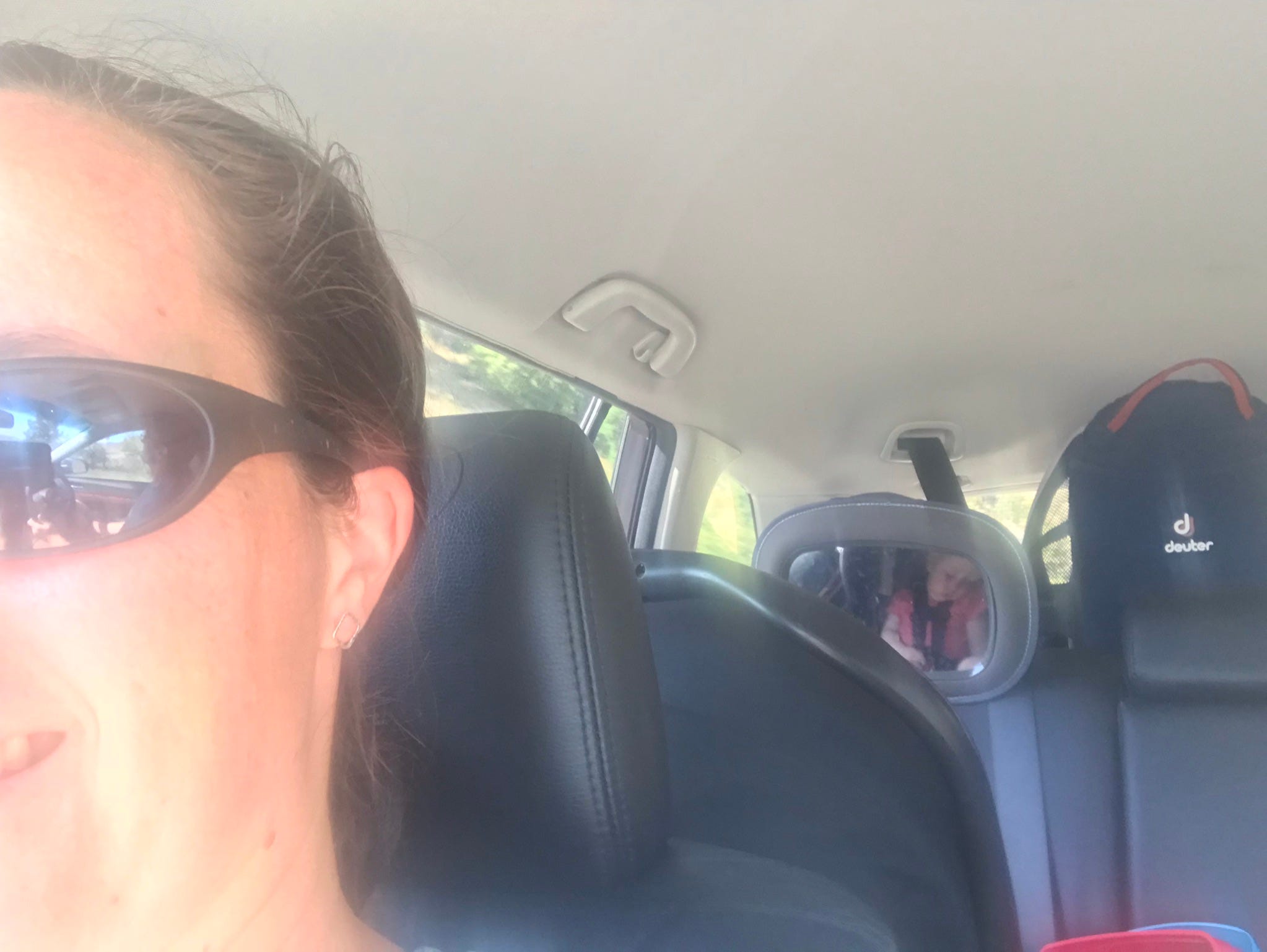
Then, a fatefully-scheduled road trip yielded anything but freedom. We ended up trapped in our car, white-knuckling our way from Idaho to California in the 105 degree heat-dome. We sped through columns of wildfire smoke, mushrooming up from blazes on both sides of the highway near Mt. Lassen. The air was so hot and unhealthy that we couldn’t safely take our toddler out of the car.
Later that summer, my parents, who live in the so-called WUI (Wildland-Urban Interface) in northern California, had to flee their home with their go-bags as a fire got to within a couple of miles of their house. I watched things unfold in real time on wildfire Twitter and WatchDuty, and was able to do… nothing. Absolutely nothing.
Daybreak
But maybe I could, in fact, do something about these sources of stress and fear. I began to wonder. I read a lot more about climate change that summer, and realized that we already know what to do, and how to do it, and are doing it, but we are just not doing any of it fast enough. I went through some really Big Feelings about this…I flickered between hope and rage, in equal measure. I also had to face the hard fact that most of the time, new scientific research, the thing I’d based my entire career on producing, is not really the limiting factor preventing action most of the time.
But as I read and thought, I realized that I could use my skills and knowledge in new ways. I could go help bend those tech adoption curves upwards and cost curves downward. Or I could help scale the excellent, abundant science that already exists.
Realizing that most of my work didn’t really matter much was freeing. It opened me up to more broadly consider the problems that mattered most, and solutions that could make the biggest impact. I cared about nature, obviously, but also climate. And digging deeper, under both concerns lay my deep concern for the well-being of people, my own tiny human but also everyone else. Human thriving is underpinned by healthy nature and climate conditions.
In the clear light of day
My next step was to learn a lot, very quickly. Luckily, that’s something I am good at and enjoy. First, I took stock of the system I wanted to enter. I worked to develop a high-level understanding of the systems’ components, relationships, and relative importance— what are the most impactful climate change and nature solutions ,and the biggest barriers to enactment? What was my “theory of change” around climate and nature (bottlenecks, tipping points, non-linear dynamics, etc.)? I did a lot of Big Picture readings, from the Drawdown Review, books like Speed & Scale, All We Can Save, Saving Us, and various syntheses and reports. And of course, since this was the 2020’s, I listened to a lot of podcasts, including Volts, Catalyst, and many more.
My biggest source of inspiration during this time was connecting with other people. I had deep, sustaining conversations with friends and in-network colleagues working in climate, tech, and the environmental movement. From there, I worked my way outwards by asking “who should I talk to next?” and “what should I be learning about or reading?”. All of this was done in secret, because any whiff of my uncertainty would have sunk my tenure prospects faster than you can say “CV.”
But I kept going, stealthily and steadily. Connections yielded more connections. I also got a lot more strategic, prioritizing conversations with people who’d already done the knowledge synthesis in problem/solution areas I found really exciting. Learning from these “synthesizers” was a huge efficiency gain.
I also signed up for a lot of job-oriented newsletters and job boards, and curated the heck out of my LinkedIn and Twitter feeds so that I was following along with “thought leaders” and the ebb and flow of big ideas. Soaking it all in, I metabolized the professional language, constellation of characters, and job descriptions that actually resonated with me. I hadn’t written a resume since undergrad, but by the winter of 2021, I had a new resume and much shinier LinkedIn page.
Reading the Impact Sundial
One of the biggest questions I faced, once I’d wrapped my head around the problems and their potential solutions, was where to focus my career search. Should I lean into my skills, my disciplinary knowledge, or maybe both? Like the true nerd that I am, I did a lot of list-making and mapping. My skills were creativity, ideas generation, data analysis, research design and synthesis, technical writing, project and people management, strategic planning, collaboration, visual display of data/design, and science communication. Conversely, my disciplinary strengths at the time spanned wildlife habitat relationships, social-ecological systems, and population and predator-prey dynamics (although my knowledge areas are a lot broader now).
I decided to try to stay at least adjacent to my discipline, because this felt like the way I could most rapidly make impact at scale. This led me to concentrate on opportunities within nature-based solutions, and where nature and climate tech intersect.
Even narrowed down like this, there was still so much to contemplate. I did a lot of paying attention to my feelings as I moved forward: when was I uncomfortable or worried? When was I excited and motivated? I also started to classify organizations by impact. The pace, energy and growth potential of start-ups really spoke to me, as well as their openness to new ideas. However, the advantages of established, high-impact non-profits was also appealing, because even if they are slower to decide on a course of action, they have the machinery in place to make change happen and stay the course.
I finally felt ready to launch the next phase of my career. I knew it could be either at a highly-effective non-profit with a well-proven theory of change, or a rapidly-growing start-up, where innovation and scalability are both prioritized. I knew I wanted the work to be in the nature-based solutions space, or where nature and climate solutions touch, and that it should be grounded in helping people. I also wanted it to be remote, so my family didn’t have to move and my husband could continue in his tenured professor role.
Critically, I was able to let go of the idea of doing an exhaustive search for the ideal “forever” job, and also to get over the scarcity mindset of academia. I accepted that I will probably do multiple jobs during the remainder of my career, and so there is no need to find the “perfect” job. I also accepted that I probably wouldn’t be “transforming” anything as a single individual. Instead, I needed to find a good bucket for my marginal “drops” of contributions.
Impact is a moving target, and that’s fine
In spring of 2022, I finally quite my tenured job in academia (fittingly, the article about this experience, in the journal Nature, is paywalled). I joined a small startup, the Natural Capital Exchange (NCX). It was a massive culture shock, in a good way. The pace was blistering, the teamwork deep, and the people creative, passionate, and impact-oriented. I loved it. I could unpack what happened there in a whole other post (what can go wrong with nature-based carbon credits, and why there is so little investment in nature via voluntary mechanisms, deserves many more words than I can give it here). But a year later, I’d experienced my first RIF (reduction in force), along with 50% of my co-workers, as NCX pivoted from carbon credits to helping landowners match with ecosystem payment programs.
This was my first experience with layoffs, and it triggered all my cravings for stability. But I ended up making peace with job impermanence, and moving one step closer to comfort with change. After getting laid off at NCX, I felt much more wary of venture capital as a good funding match for nature-oriented solutions, since it is just very hard to be a 10X growth “unicorn” in this realm. Nature’s materials underpin our entire economy. There are a lot of business models built on its extractive use, but much fewer built on its repair and stewardship. It’s going to be a slower slog, with more companies and solutions, than most other forms of tech. We need a whole pack-train of nature-tech mules, or even herds of zebras, but instead many are run into the ground by unrealistic growth expectations or never foaled at all (again, fodder for a whole different article).
Nevertheless, I jumped at the opportunity to join Vibrant Planet. Another VC-backed startup, VP felt as though it had a strong business model and was getting some good traction and scale. VP’s platform aimed to streamline wildfire risk mitigation at scale. The planning process is currently a huge bottleneck to reducing wildfire risk, with mitigation projects taking years to make their way through the complex system. An online planning platform could accelerate impact by reduced planning time and burden while optimizing solutions based on users’ actual values (water, wildlife, assets, safety, recreation… ecosystems are complex). While I was there, we worked with big collaborative groups with many stakeholders, including the Calfire, USFS, BLM, the Nature Conservancy, local orgs and agencies, Tribes, etc.. I spent two great years there, working to develop science partnerships and bring biodiversity science into the decision platform in fast yet rigorous ways, and learned an enormous amount about collaboration, decision-making, and building tech platforms.
But then things changed, yet again. In 2025, I watched as federal actions on forest management and the wildfire crisis slowed and stalled. The acreage treated last year for hazardous fuels by the Forest Service was down 40% , compared to the previous year. Meanwhile, wildfire costs continue to escalate, and are torching state budgets. Luckily, Vibrant Planet has succeeded, despite the federal headwinds, and I’m hopeful that federal agencies will ramp up wildfire mitigation again someday, ideally with a better permitting and action system in place. But I decided that I was ready to go work on fixing the system in a different way, in the interim. Luckily, by this time I was much more comfortable with change, and approached my next move with a lot less anxiety.
That’s when I made the leap to my current position at PERC (the Property and Environment Research Center), a non-profit that does research, pilot projects, and policy. This “chain of change” really excited me— we ground our ideas in the best available economic and ecological data and research, pilot innovative new incentive programs ourselves, and then work to change policy so that proven systems for better incentives can be applied more broadly, and bottlenecks to positive action can be removed. And land owners and stewards are at the center of how we see things working and changing, not the periphery. I’ve gotten to bring my passion for building more habitat for humans and non-humans alike (“conservation abundance”) to my work, and look forward to continuing to grow these ideas, in collaboration, so we can fix our broken systems.
I’m now so much more comfortable with change, for myself and in our broader society and systems. As George Bernard Shaw said:
“Progress is impossible without change, and those who cannot change their minds cannot change anything.”
I’d love to hear about your own change journeys. What did you want to change, and why? How did you overcome inertia and jump into something new? Are you standing on the edge, contemplating a change?
I really enjoyed reading your story of embracing change! Made me think of Octavia Butler. I've been through some big career/life pivots too, and have lately been thinking about where best to put my efforts, so it was really helpful and timely to read this journey of yours.